Disability Justice Art
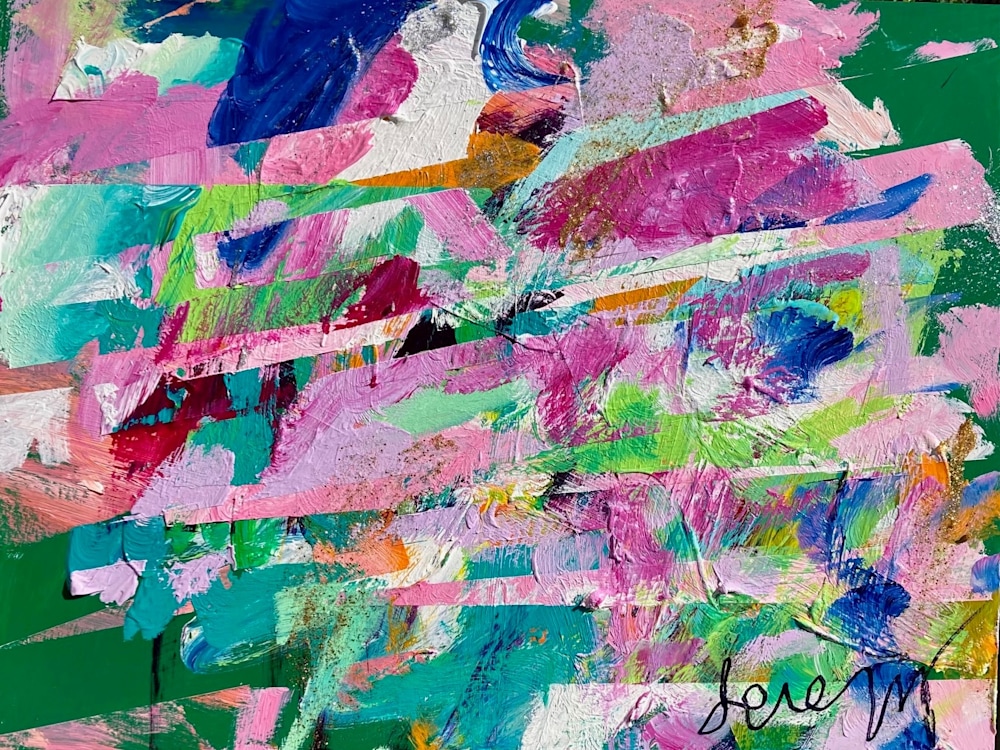 |
| "Treating Others with Kindess" by Jeremy Sicile-Kira, 18x24, acrylic on wood panel. |
This week we discussed the topic of disabilities and how they are accommodated for in the art world. Which I discovered that most times they are not accommodated for at all. If you wonder how this relates to you, because you may not be disabled, it does relate to you. Anything can happen in life, which could make you disabled. All it would take is one bad car crash for you to never be able to walk again. Being abled is temporary. It is very exclusionary to dismiss the disabled because you are not disabled. The key of societies is for people to take care of one another. Whether you are abled or disabled, taking care of one another is essential.
In the art world, we looked at current barriers disabled people face, mainly in art museums or exhibits. Some examples of these barriers are no ramps for wheelchairs, many museums have little to no seating, which means a lot of walking. In art, we always assume our audience can see, and some cannot. Some cannot hear as well. Then we looked at everyday barriers, which could be at school or in daily life. Examples of barriers in school are teachers not being properly educated on disabilities, in-class tests can be difficult for people with learning disabilities, when people need learning accommodations it can be very expensive and time consuming.
The writing for this week had a section that described the IWBWYE exhibition.
“I was in New York at Performance Space New York (PSNY) and the Whitney Museum as a performer, coconspirator, and enthralled audience member in I wanna be with you everywhere (IWSWYE), “a gathering of, by, and for disabled artists and writers and anyone who wants to get with us for a series of crip meet-ups, performances, readings and other social spaces of surplus, abundance and joy.” I was in a room of 300 disabled people flirting, talking, stimming, and resting, coming back night after night to see disabled art and be with disabled people.”
- Leah Lakshmi Piepzna-Samarasinha
Leah explains how this art exhibit was a place for disabled people to come together over art and how it was extremely inclusive. The types of disabled friendly things they had were sensory rooms, a giant bed, projected captions, descriptions and sign language interpreters, wheelchair seating in the first four rows not in the back, and more. The performances were spaced out with enough time to use the bathroom or rest, and this also allowed for time to process the art. This exhibition also accounted for sensitivity to smell, dietary needs, and allergies. This exhibition was inclusive and accommodating in many ways you would not find at a typical art museum.
There are a lot of people in the world with disabilities who want to enjoy art, but the museums and performances are not accommodating. One thing Leah describes is the “major sense of ease.” People with disabilities just want to feel at ease in their surroundings.
“Lack of access is as much about the assumption that everything must happen at a breakneck pace, with no shifting to make room for a new access reality (lateness, vomit, a panic attack), and/or an attitude of guilt, defensiveness, and “it’s impossible, we can’t do that” from producers when an access hiccup happens or people ask about access at all, as it is about what equipment is in the theater.”
- Leah Lakshmi Piepzna-Samarasinha
Most often than not, the pace in performances is rushed. There is little to no time to process what you just saw when seeing performances back-to-back. Leah explains that producers tend to use equipment of the theater as an excuse. She then further describes that ableism is directly at play.
“For a sphere that prides itself on pushing the envelope, where nothing is too wild, blood and shit smeared on bodies is no problem, performance and theater are remarkably conservative when it comes to cripping performance.” - Leah Lakshmi Piepzna-Samarasinha
I interpreted that Leah is saying how “out-of-the-box” and “inspiring” art is accepted in today’s society. She says that nothing is too wild and too bold. Art is supposed to be thought provoking. However, asking for accommodations is what makes people squirm. Theaters and performances are very traditional in the sense that they are not disability friendly.
So, what can we do as students taking part in higher education? We can enforce disability friendly exhibits. This could be immersive exhibits where people listen and have captions. This includes alternate text that mentions the medium, size, and a description of the art for people who a troubled with vision. We can enforce more seating in art museums and exhibits. Another idea is a quiet day in the museums for people who get overstimulated, or an active day for people who need stimulation. The best way to be inclusive is to really listen to the people needing accommodations, rather than assuming what they need. The world has to be open to change and be accepting of the people who need a little more than others.
The art I chose is a piece created by Jeremy Sicile-Kira. Jeremy is an artist with Autism. He had a hard time with his parents in accepting his disability. He used art as a way to cope with his hardships and it brought him a sense of peace. He struggles with processing colors and images.
“When I dream at night, I am processing what I have seen and heard during the day. In this way, I create glorious paintings in my mind. Kindly I paint my visions to give people hope, and in this way, I help make a difference in the world.” – Jeremy Sicile-Kira
I found his art to be inspiring for those who also have disabilities. His work truly is beautiful.
Leah Lakshmi Piepzna-Samarasinha, "I Wanna be with you Everywhere (And I Am): Disability Justice Art as Freedom Portal," in The Future is Disabled (Arsenal Pulp Press, 2022), 183-196.
Kira, J. (n.d.). Treating Others With Kindness Art | Jeremy’s Vision. Www.jeremysvision.com. Retrieved November 21, 2023, from https://www.jeremysvision.com/originals-warehouse/original_art_products/treating-others-with-kindness-39rpzbtfbco?product_gallery=114295&product_id=4294958#

Comments
Post a Comment