Positive Images
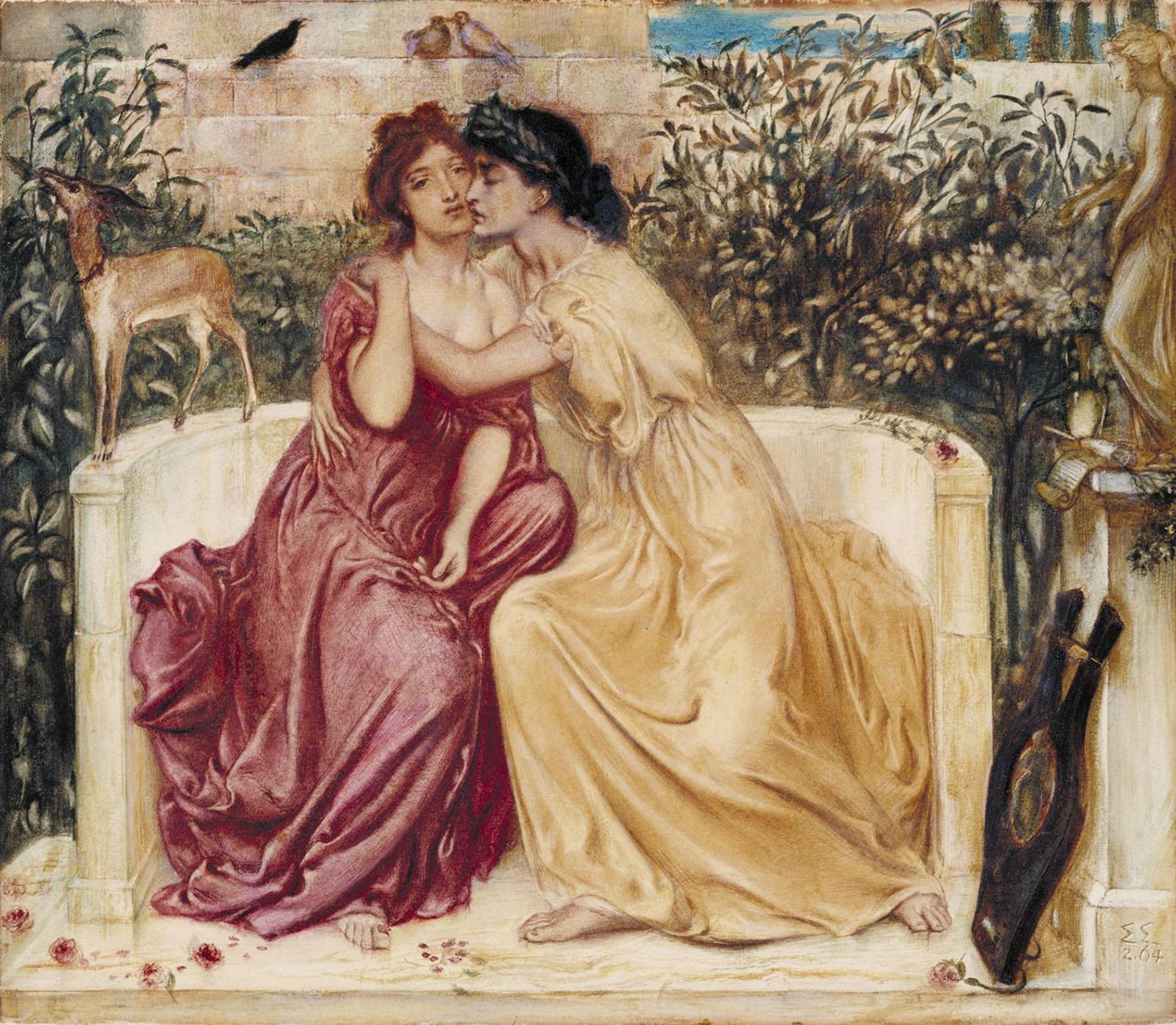 |
| Sappho and Erinna in a Garden at Mytilene, Watercolor on paper, 1864, Simeon Solomon |
The first question asked on our weekly Nearpod was, “What do photographs depict?” This question made me really think about what photography means to me as well as other people. Typically, photography was used to capture specific memories. This could be stories, portraits, families, special events like weddings or birthdays, etc. Photography was a hard process back in the day, so what was captured had to be important. Most of the important moments captured were good, not bad. The photographs were a positive reflection of reality. Nowadays, we have cameras on our phones. Any picture can be taken at our disposal, which has taken advantage of traditional photography. While Gen Z tends to take pictures of quite literally everything, which I am guilty of, they still tend to capture good moments rather than bad ones. For example, you might make a wonderful steak dinner for Valentine’s and snap a picture of it on a set dinner table with some flowers in the background. However, you may not be inclined to snap a photo of the dirty plates on the table, or the flowers dying weeks from now. More often than not, people capture good memories. I know I love photographing happy moments. I once went on an incredible trip to the Caribbean with my best friend for her sixteenth birthday. We made a video montage of the entire trip because it was an amazing time and we wanted to remember it forever.
Then we began to dive into the subject of photographing subcultures in only a normal or regular happy light. The subcultures being photographed would enforce these pictures to be of them doing normal everyday things. While subcultures welcome positive images, photographers typically want more. They want edge and vulnerability to make the photography unique and meaningful. Subcultures do not appreciate this. The subculture groups watch their representation in media so strongly because they do not want to be seen negatively. If they were to be shown negatively with one bad representation, it could change how they are perceived and treaty by societies. As we know with social media today, everything is taken to the extreme. An example would be in a movie, if a white woman played the role of a horrible, awful person, that would go unnoticed. Why? White women have so many stereotypes that one bad representation in a movie does not really impact them. This is because white people as a group have multiple types of representation. Now if you had an Indigenous woman play the same role, it would go noticed. Indigenous women do not have nearly as much representation as white women do, so that one misleading bad role could impact Indigenous people as a whole. This all explains the scarcity of representation for subcultures.
Now to relate this all to this week’s readings, we discussed the representation of sexuality in photography.
“The lovingly crafted portr
This section of the reading is mentioning how many lesbian couple photographs during the 1970s and 1980s were to display a normal life. Having these couples photographed, devoid of sexual behaviors such as love and lust, made them appear less “deviant.” Homophobia was still at large during this time period. People saw lesbians as troublesome or unholy. Many women were discriminated against due to their sexuality. When these couples posed with their pets, big smiles, modest clothing, they appeared perfect. They did not show anything sexual in the photographs.
“I'll remark only that the dominant strategy in North America was to downplay the sexual component in the lesbiancommunity and instead emphasize its spiritual or emotional basis (
deal of lesbian identity- resurfaced (one is tempted to say, with a vengeance, as in: the
return of the repressed) in the second half of the 1980s.” – Jan Zita Grover
This lengthy quote has a lot to unpack. I found the first part to be interesting. Rather than representing the actual sexuality and sexual desires of lesbians, photographers represented them in a spiritual and emotional way. The removal of the sexual aspect of lesbian relationships allowed heterosexual people to see them as regular people. As Grover mentions, one reason for doing this was the homophobic women within the women’s movement. Photographing lesbians in a non-sexual manner would make it so heterosexual women could not degrade homosexual women for being “too sexual.” Then Grover explains that those sexual aspects are what drive lesbians and their identities. When people talk about sexuality, it is based on what they are sexually attracted to. Hence the meaning of the word sexuality, which is “a person’s identity in relation to the gender or genders to which they are typically attracted; sexual orientation.” (Oxford Dictionary) It is true that the sexual desires and lust and love should be represented in photography because it is what sexuality is really about.
Palumbo, J. (2020, June 29). This Victorian painting depicting two women in love was nearly lost in history. CNN. https://www.cnn.com/style/article/simeon-solomon-art/index.html
Jan Zita Grover, “Framing the Questions: Positive Imaging and Scarcity in Lesbian Photographs” (1991)


Comments
Post a Comment